
High Frequency Trading App
SBI Japan needed a new high‑frequency trading (HFT) platform that could keep up with ultra‑fast markets while fitting seamlessly into traders’ existing mental models and workflows. As the lead UX designer, I partnered with domain SMEs, business stakeholders, and front‑ and back‑end engineers to translate dense functional requirements into a performant, trader‑friendly interface.
My Role & Scope
- End-to-End Ownership: Defined user journeys and interaction patterns for real-time data, order entry, and risk controls.
- Stakeholder Synthesis: Facilitated working sessions with traders, PMs, and engineering to prioritize high-utility use cases under strict regulatory constraints.
- Systems Design: Created a scalable library of interaction guidelines for complex data tables and execution states.
The Strategic Challenge
Traders were operating within a "patchwork" environment—using legacy tools alongside custom scripts that were fast but incredibly brittle. As the desk scaled, this inconsistency became a liability.
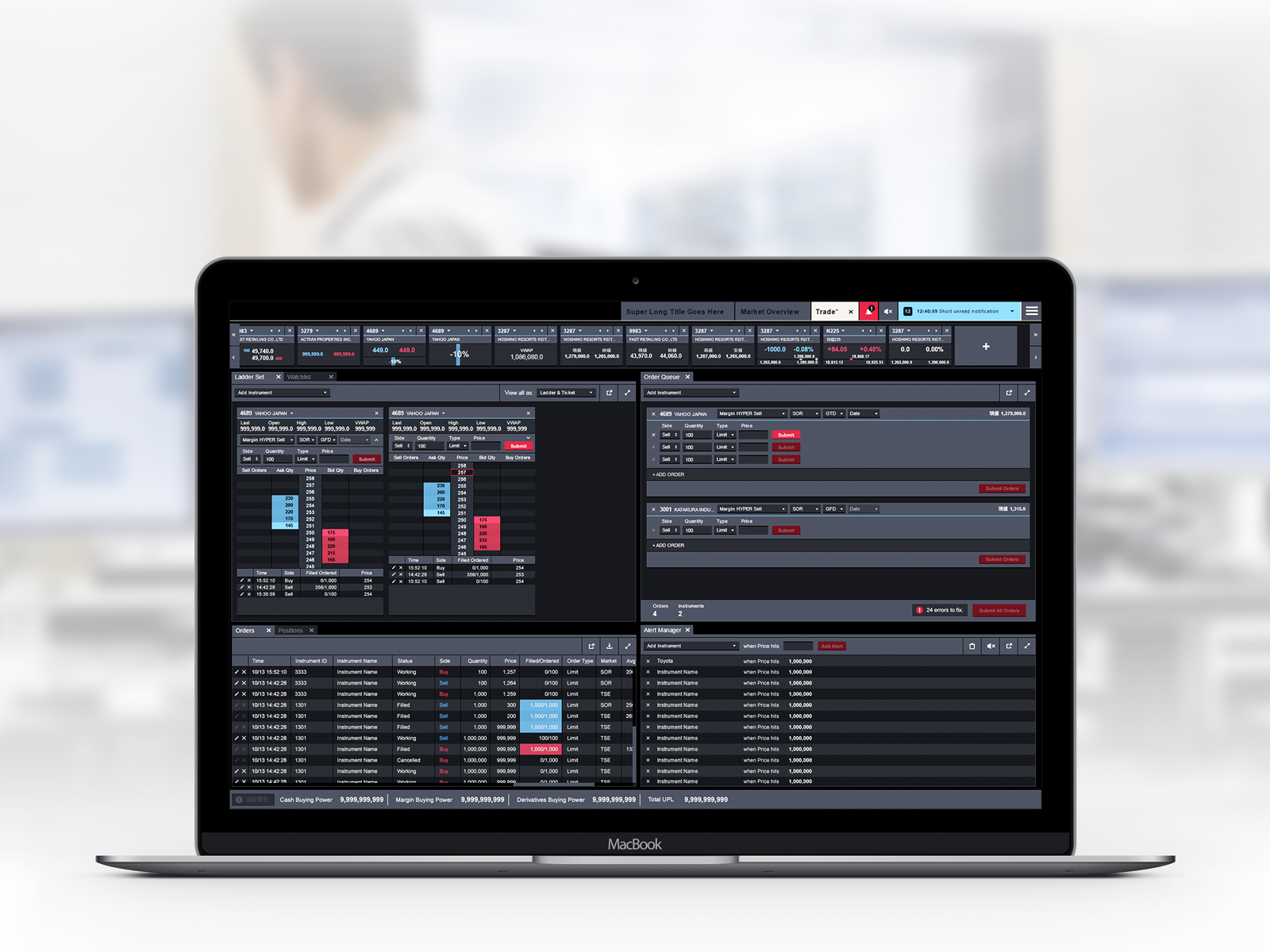
The core tension: The UI needed to surface massive volumes of streaming market data and support rapid-fire order entry, all while minimizing cognitive load. If a trader has to squint to find a risk indicator during a market spike, the design has failed.
Key Constraints:
- The Latency Budget: Every visual element had to be optimized for rendering speed; the UI could not lag behind the backend.
- Multi-Screen Density: Designs had to perform across 4–6 monitor setups with varying resolutions.
- Regulatory Guardrails: Risk controls and "kill switches" had to be persistent and impossible to miss.
Deep Dive: Learning the Domain
Since I wasn’t a career trader, I started with an intentional immersion phase where I shadowed live trading sessions to map out decision-making under high-pressure market conditions.
From this research, I established three Experience Principles that governed every design decision:
- Don’t slow them down: Efficiency over aesthetics.
- Keep risk visible: Never hide the "state" of the system.
- Predictable outcomes: Every hotkey and click must have a deterministic result.
Design Decisions: Optimization over Decoration
I restructured the layout around the trader’s mental timeline: Market Scan → Opportunity Identification → Order Entry → Monitoring.
- Keyboard-First Interaction: I optimized the most frequent tasks for hotkeys, reducing the reliance on mouse movement which is too slow for HFT.
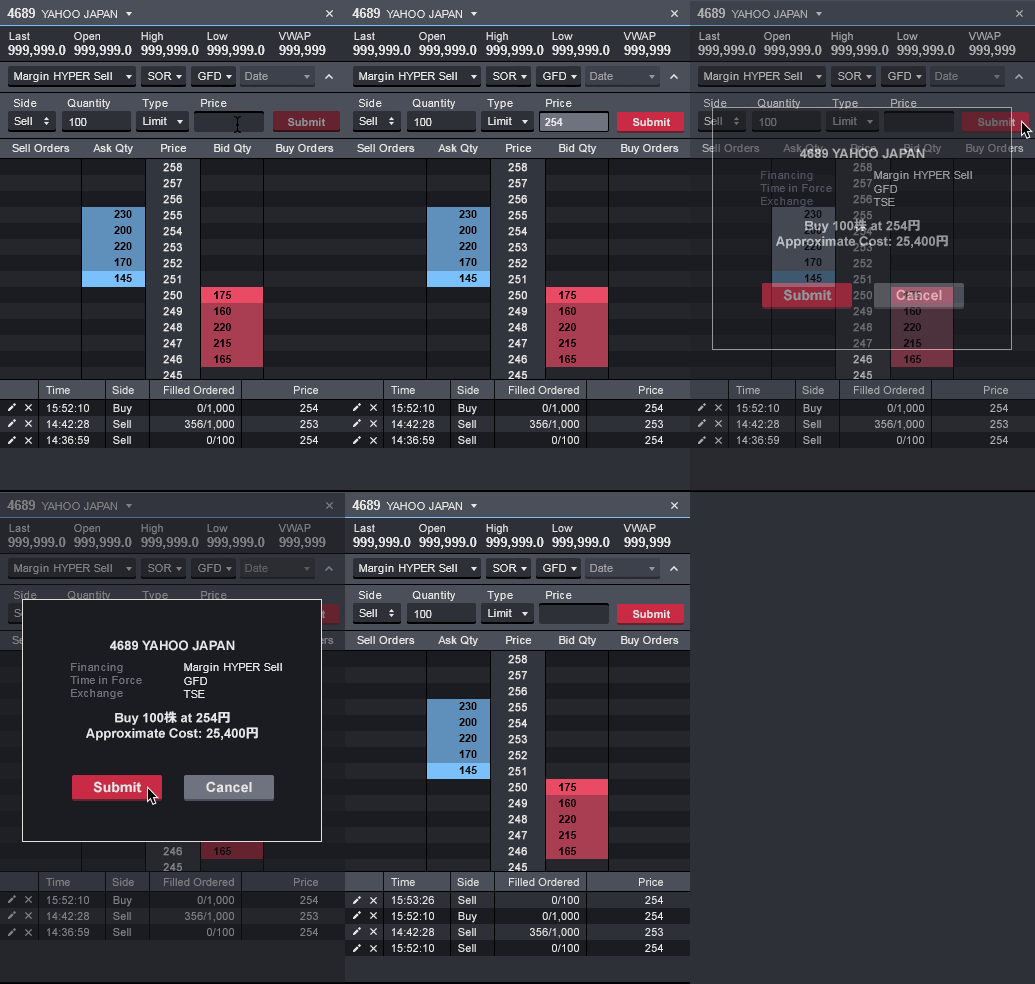
- Visual Hierarchy for Risk: I preserved familiar patterns like ladder-style price displays but stripped away visual noise, using "at-a-glance" color cues to highlight exposure limits.
- Engineered Performance: I collaborated with the dev team to ensure high-priority components (like the order book and positions) rendered first, ensuring traders saw what mattered most even under heavy system load.
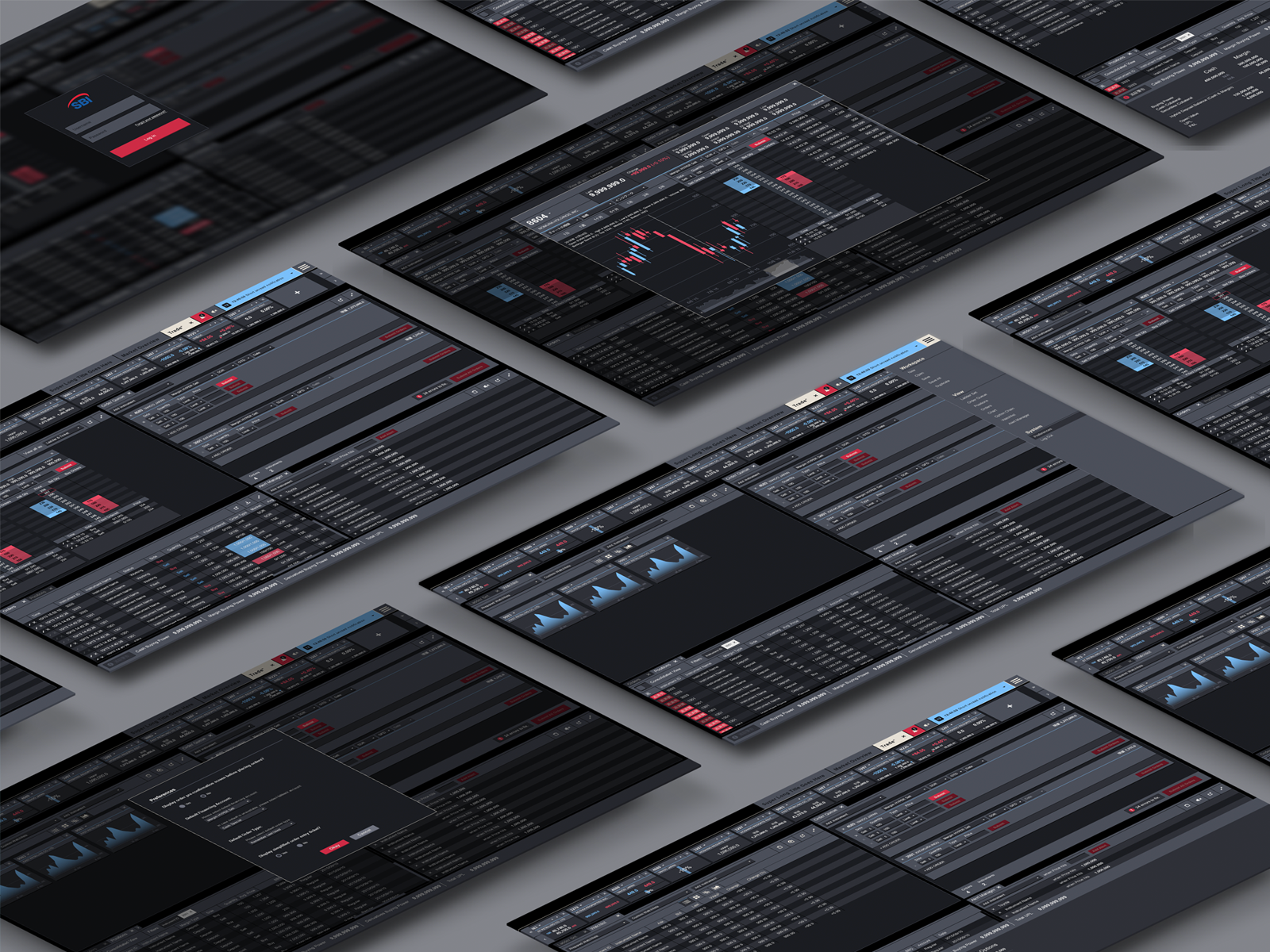
Some pages from the software graphic guidelines I created for the development team.


