Digitizing Manual Processes for 18,000+ Employees
When Southwest Airlines set out to modernize its Ground Operations systems, they faced a challenge decades in the making: critical scheduling, attendance, and shift bidding processes were still running on paper and legacy desktop tools. These systems were complex, rigid, and required manual coordination across thousands of employees and union workgroups. My role was to lead the UX strategy that would transform these manual workflows into a mobile-first digital platform — one that worked for ramp agents, supervisors, and operations managers alike.
Understanding a Workforce in Motion
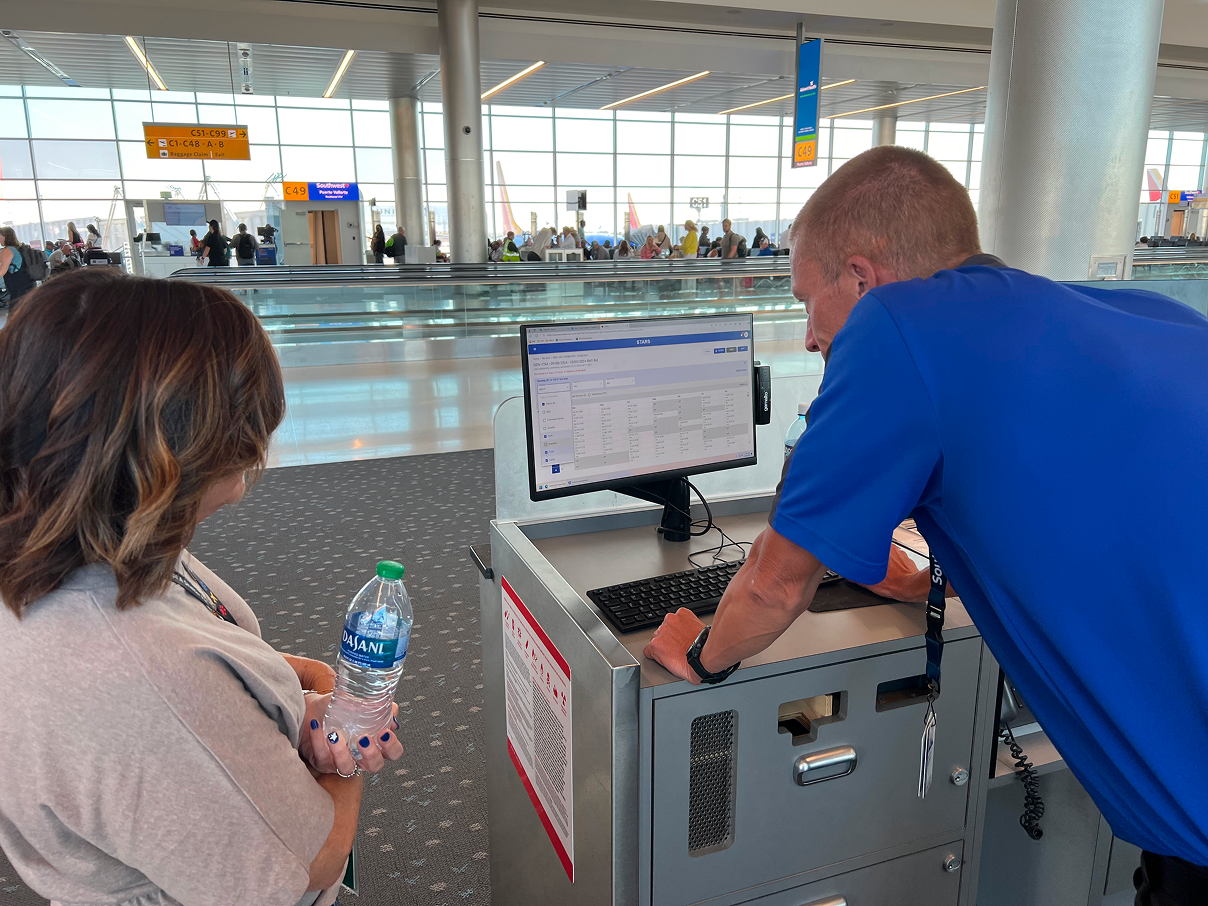
Southwest’s frontline workforce operates 24/7 in fast-paced, physically demanding environments. Through interviews and co-creation sessions with Southwest, I gained firsthand insight into their rhythms, pressures, and priorities.
We uncovered that while reliability and compliance were non‑negotiable, workers also craved clarity and autonomy. Paper-based bidding and scheduling often created confusion, administrative errors, and morale issues. The design challenge became clear:
How might we make complex operational systems feel as easy and empowering as using a personal app?
Designing for Scale and Simplicity
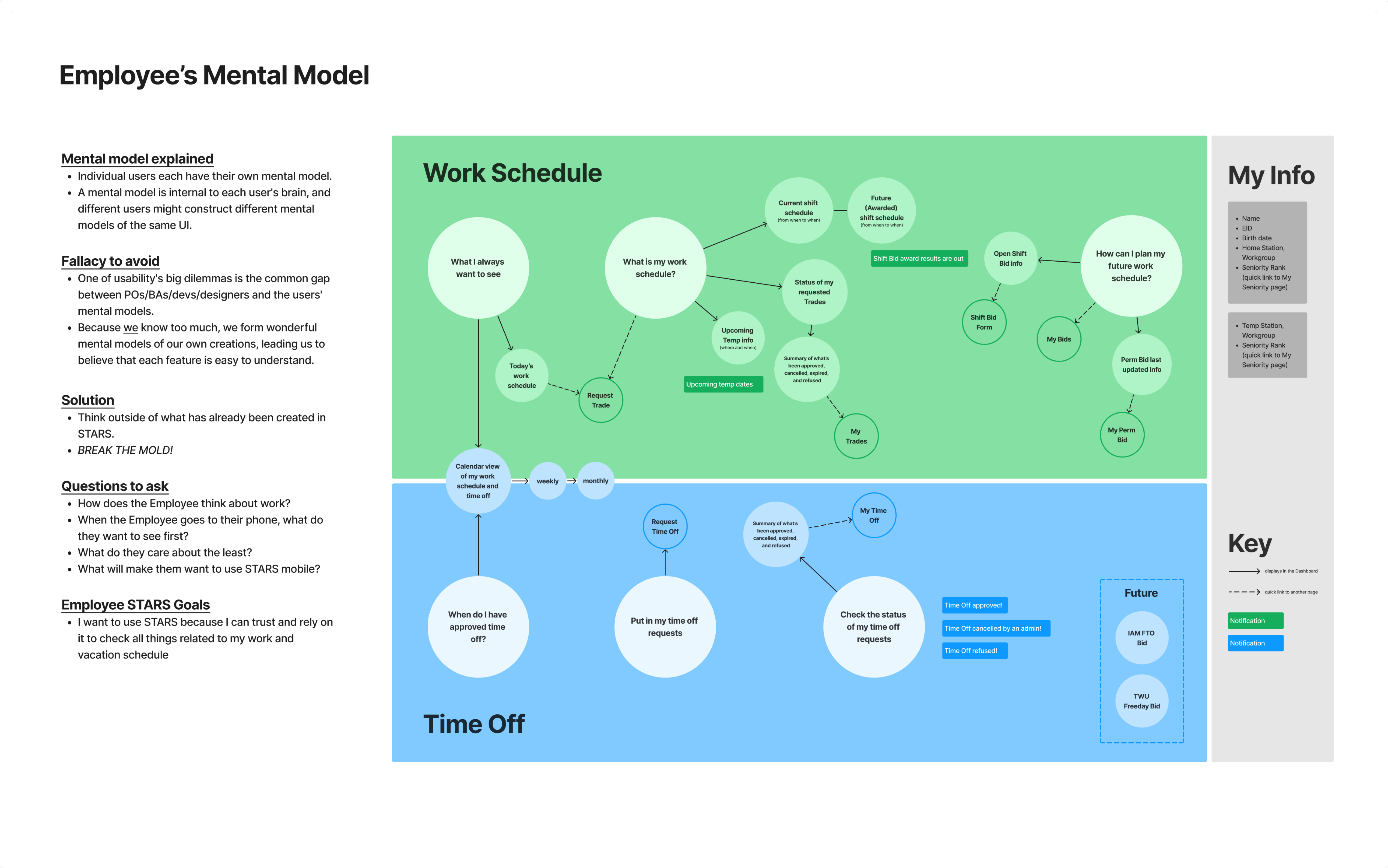
I partnered closely with engineering, operations leadership, and union compliance teams to create a holistic UX strategy that addressed the needs of both the frontline worker and the business. Our work focused on four critical areas:
- Digitizing attendance and scheduling for over 18,000 Ground Ops employees, eliminating error-prone manual steps.
- Bridging legacy systems with a modern, mobile-first interface adaptable to multiple roles and union rules.
- Creating a unified design system that laid the foundation for a cohesive digital ecosystem across Southwest.
- Ensuring compliance and integration by embedding UX into cross‑functional decision‑making with technology, labor standards, and operations planning.
The resulting solution, called STARS, reimagined how shift bids and scheduling were managed — making complex, high-stakes tasks fast, error-resistant, and intuitive.
A Look Into STARS
The immediate impact
During the pilot launches in several airports, feedback was overwhelmingly positive. Agents quickly embraced the new digital workflow:
- 88% of agents said bidding in STARS was easier than the old paper system.
- The number of permanent bids more than doubled (from 488 to 1,007), showing stronger engagement and confidence in the platform.
- Ground Ops leaders reported a targeted 70% time savings in building and awarding bids — transforming a process that once took days into one completed in hours.
- The pilot launches closed with zero critical defects and strong adoption across all roles.
Digitizing a paper-based shift bidding process that had been in place for decades
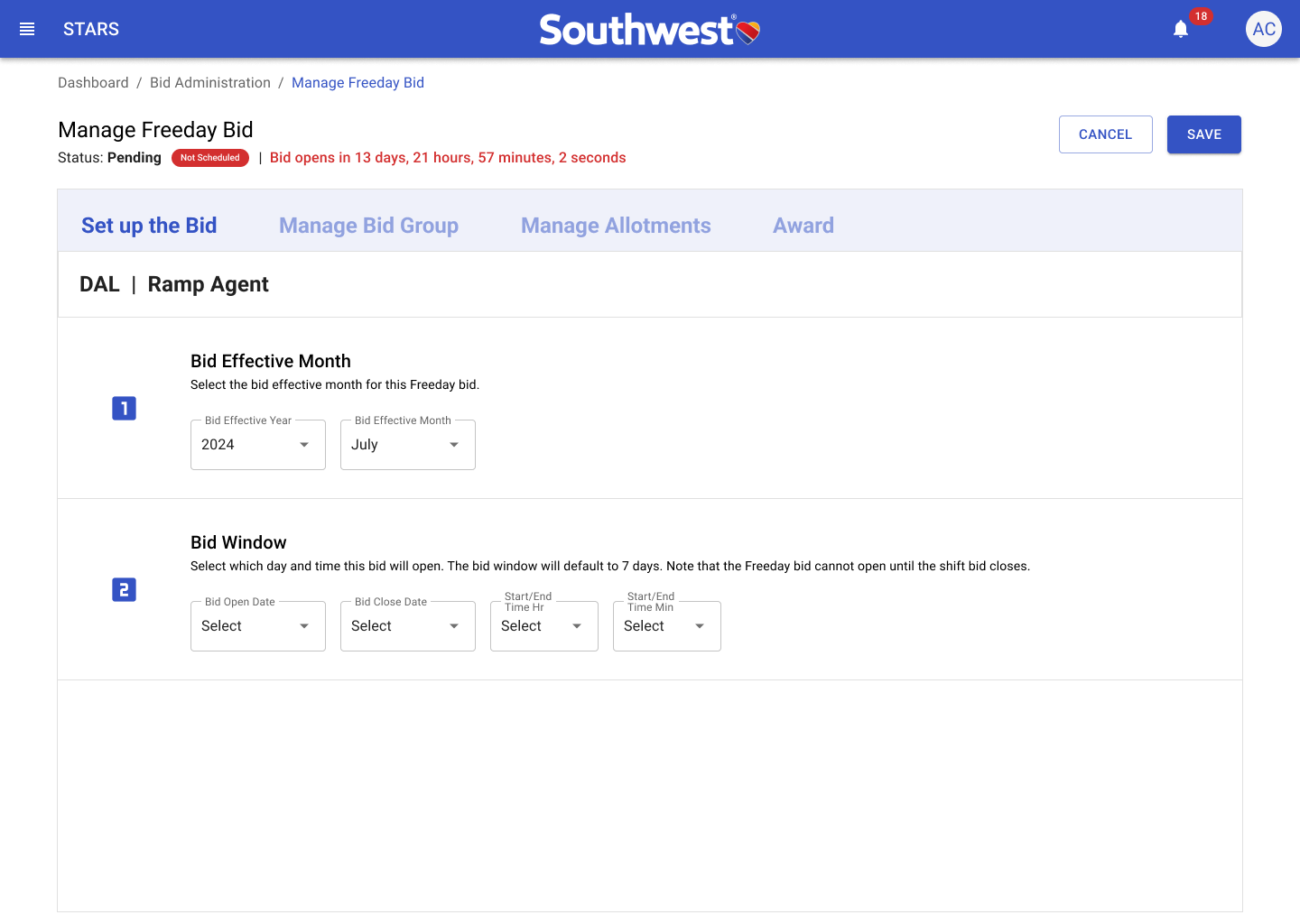
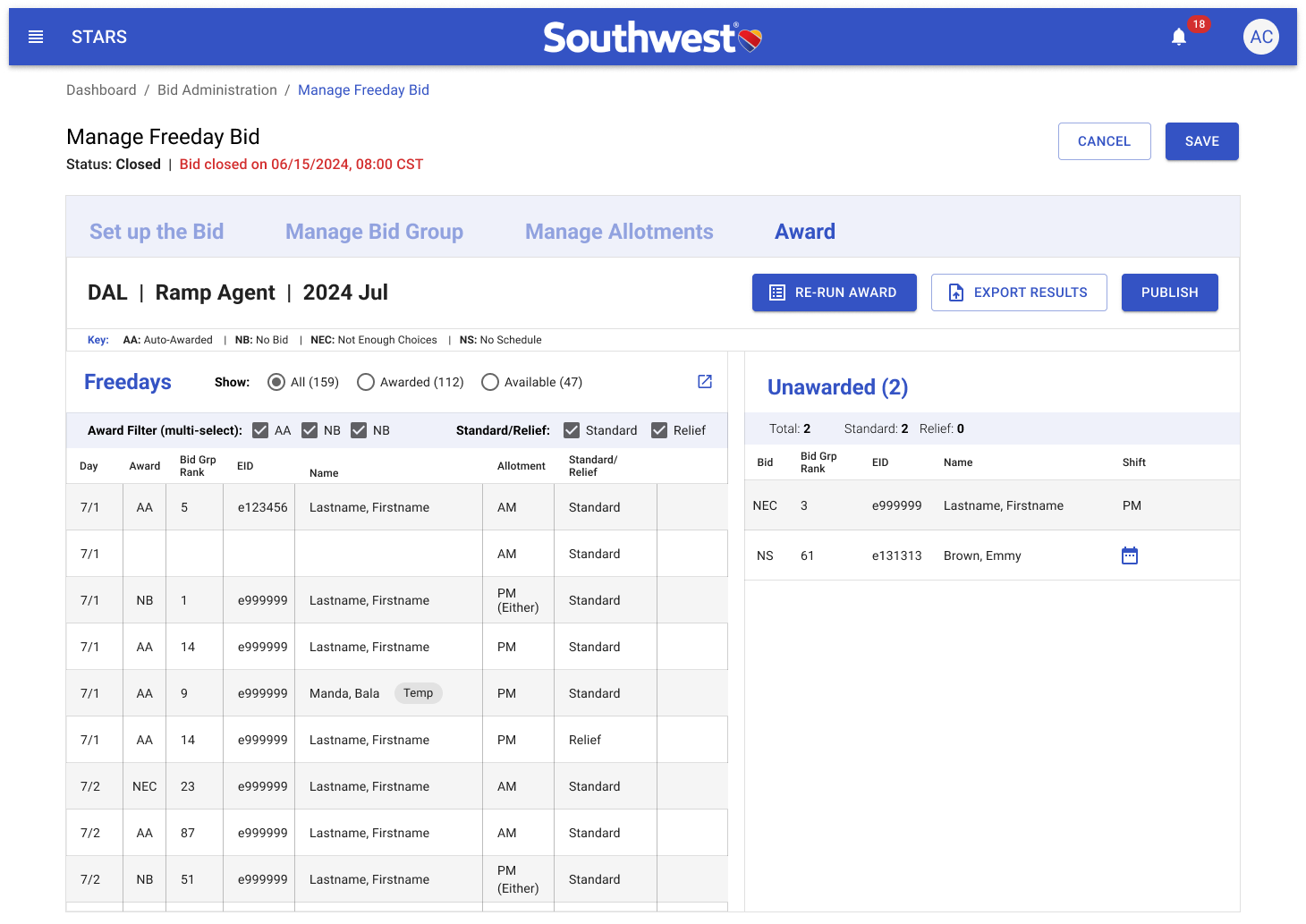
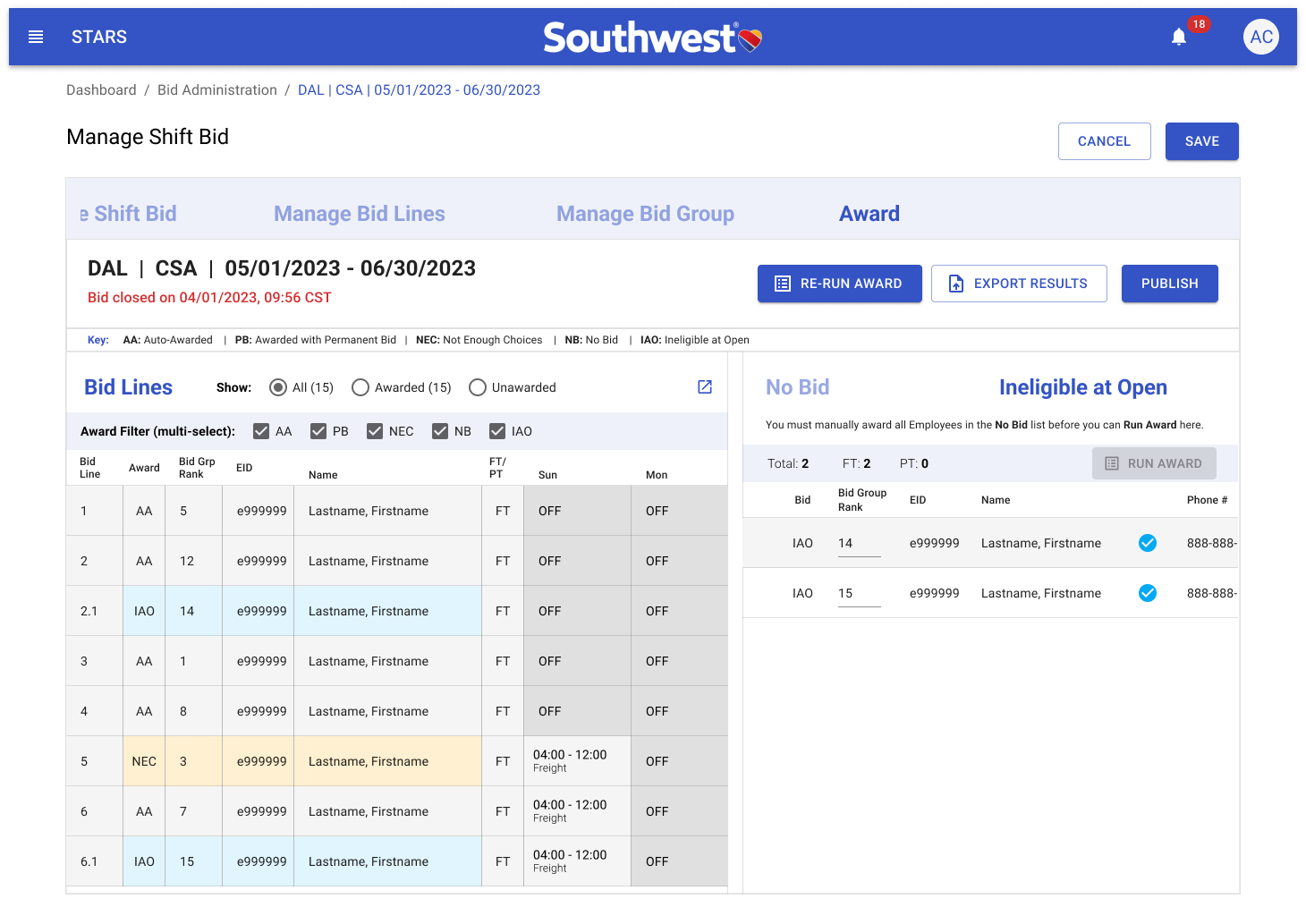
In order to bid for their shifts, Ground Ops employees have been filling out physical forms, then a team of over ten administrators painstakingly reviewed each submission, cross‑checked union rules, and manually awarded shifts. What should have been a simple preference-based workflow always took a week plus to complete — with countless opportunities for errors, data loss, or misunderstanding.
Through deep research and co‑design sessions with both frontline agents and schedulers, I mapped the end-to-end process and identified where digital systems could remove friction while still honoring existing policies and compliance constraints.
The solution was a series of streamlined digital screens that guided agents through bidding with clarity and confidence — from selecting preferred shifts to confirming eligibility. For administrators, the system automated validations and awards, reducing manual oversight to just a few review checkpoints.

A personalized dashboard experience
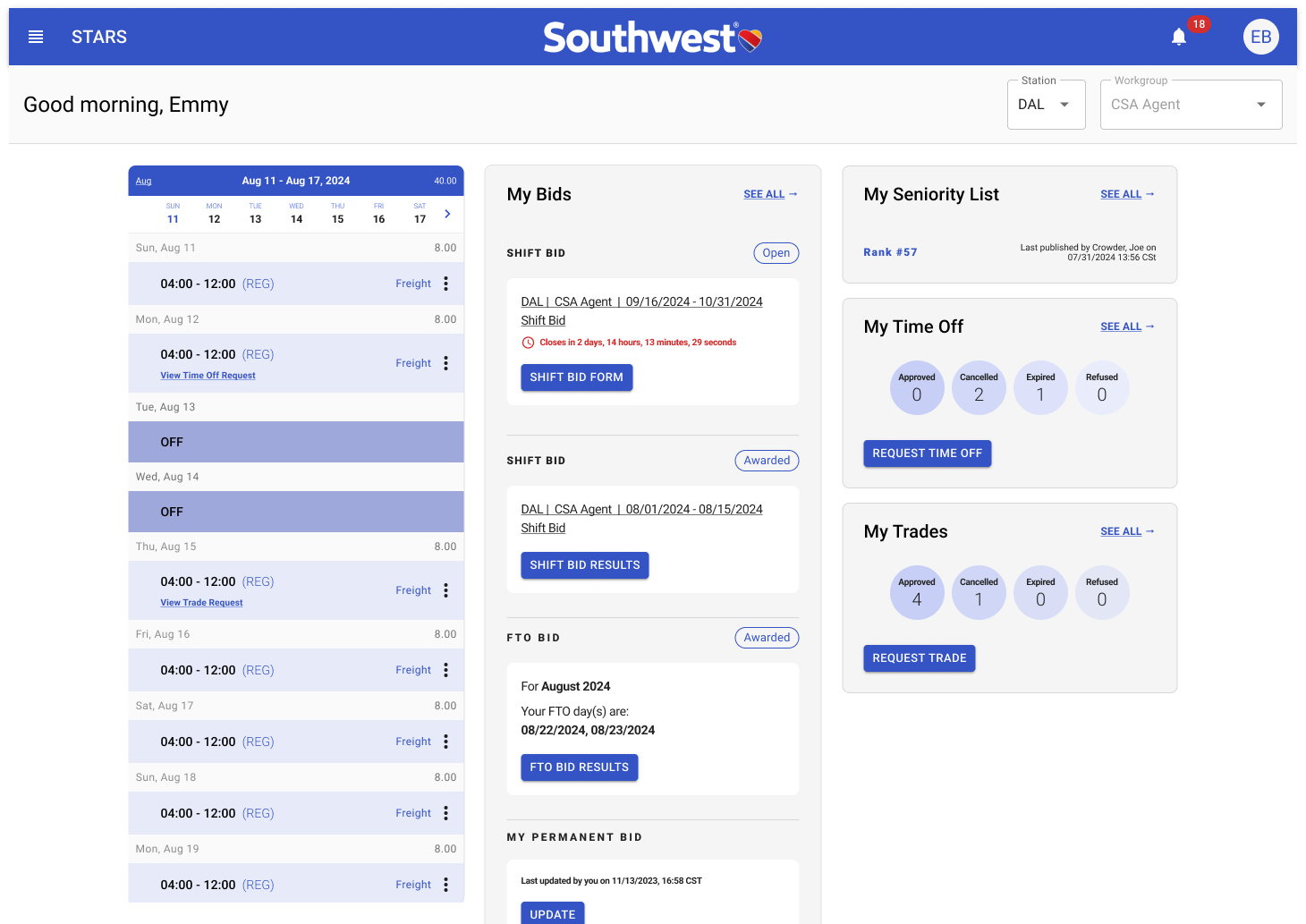
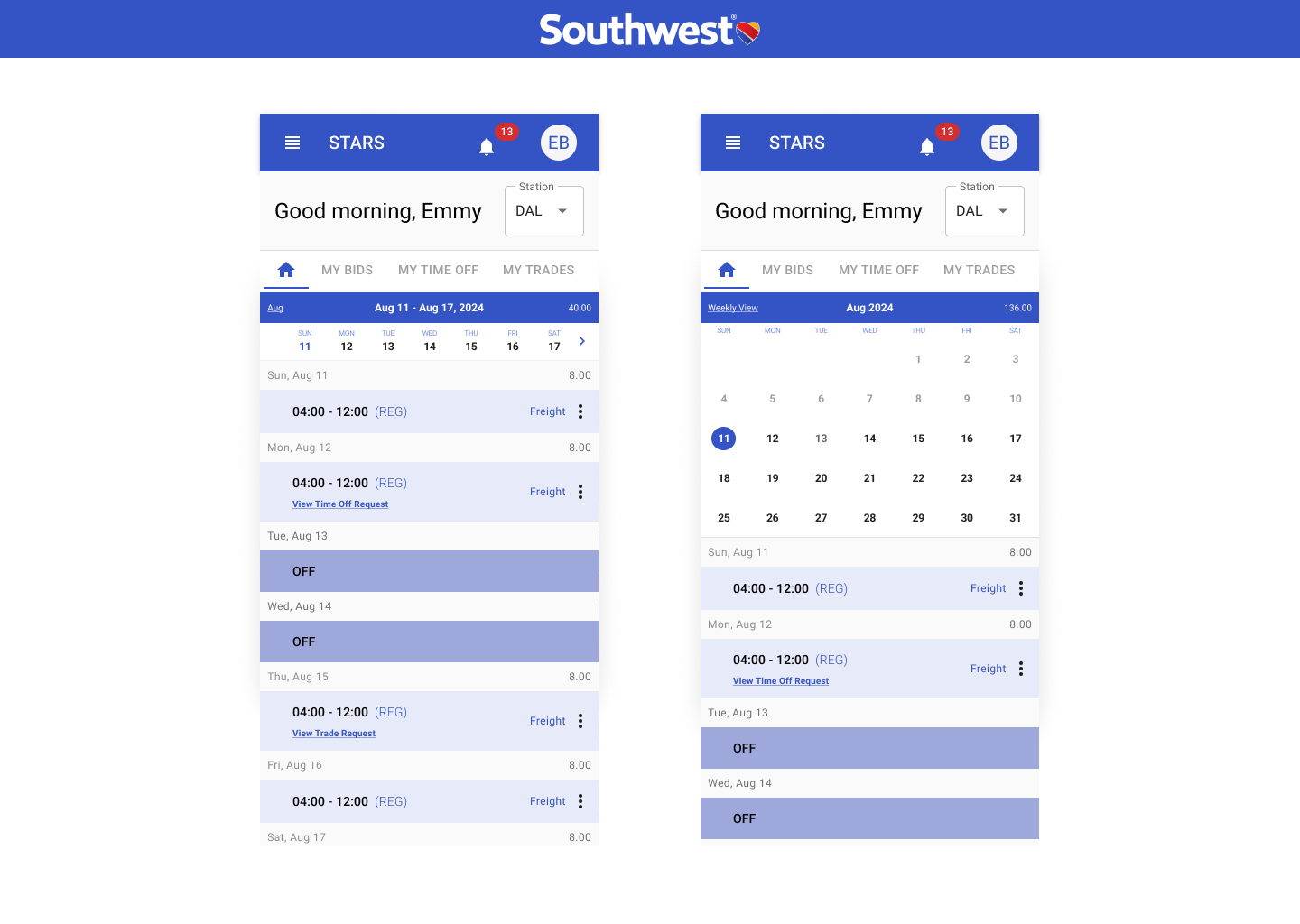
When users log in to view and manage their work schedule, the objective is to provide the most critical information immediately.
- Focus on at-a-glance clarity and paying attention to information hierarchy.
- Minimize the number of steps to get to core tasks: request time off, view open shifts, so forth.
- Personalization and user control: allow users to view their schedules by month or week.
- Familiarity: design language and patterns consistent with how people view their calendars and think about schedules.
New feature announcements
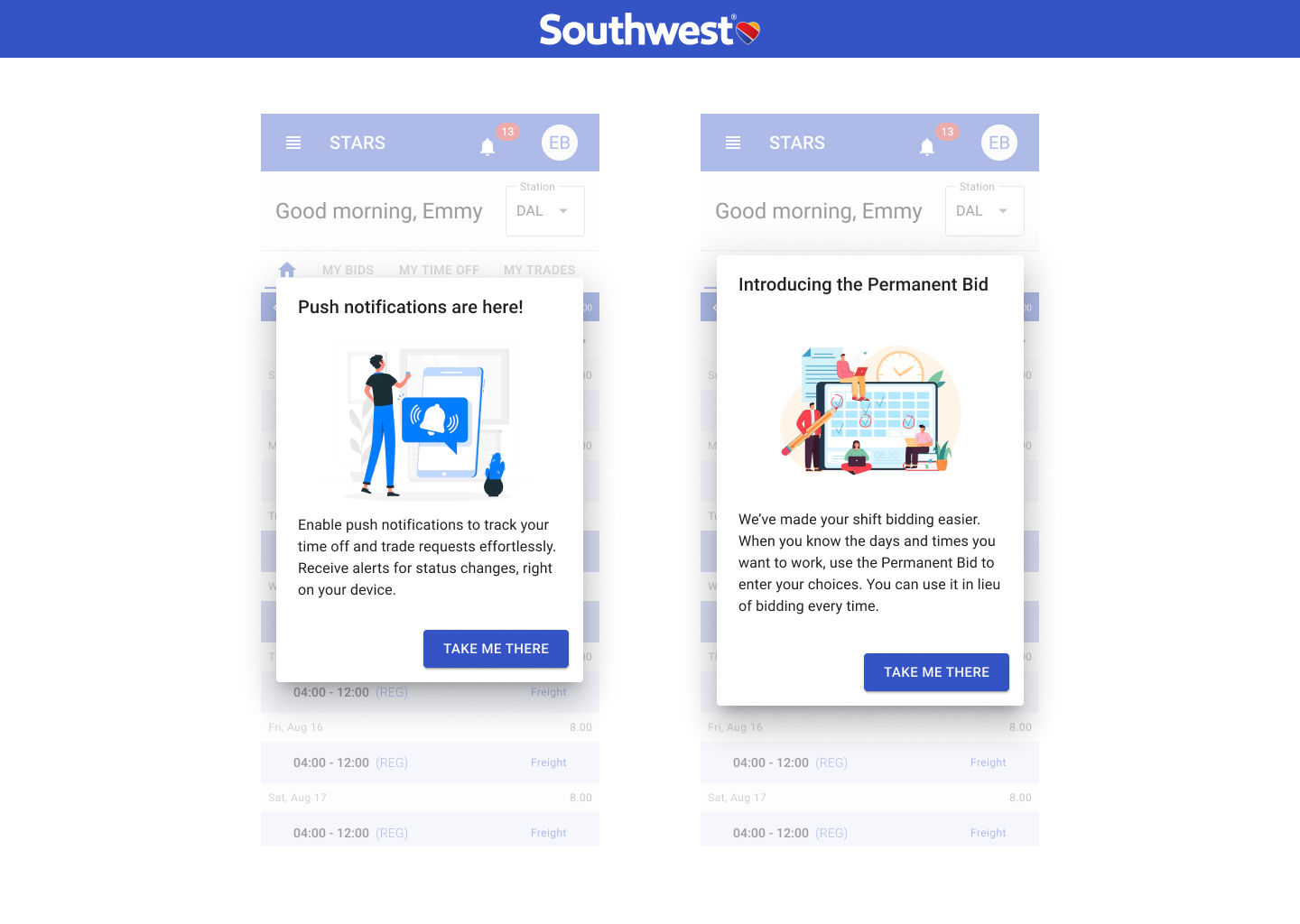
Every bit of friction is a potential drop-off point. When a new feature in STARS was being launched, my goal was to create an experience that feels intuitive rather than instructional—empowering users to explore at their own pace rather than forcing them down a rigid path.
To achieve this, I focused on:
- Radical Simplicity: I minimize the number of steps required and rely on clear, plain language to get the point across instantly.
- Personality & Warmth: I believe onboarding shouldn't be a chore. I use engaging visuals and a human tone to make the process feel like a friendly invitation rather than a technical manual.
- The "Goldilocks" Balance: I strive to provide just enough guidance to prevent confusion, without over-explaining the obvious.